

A meeting summary looks like one feature. It is really three, chained together, and each one can fail differently.
Step one: transcription
Audio becomes text. This part is mature and mostly solved for clear speech in a supported language, and it degrades in predictable ways: crosstalk, heavy accents in an under-represented language, poor microphones, and jargon the model has never seen.
The practical consequence is that transcription quality is mostly an audio problem. A good headset improves your summaries more than any change of model.
Step two: attribution
Text is assigned to speakers. This is harder than it sounds, and it is where most visible errors come from — two people with similar voices, or one person talking over another, and a decision gets attributed to the wrong owner.
Attribution is much more reliable when each participant has their own audio stream, which is one reason a browser-based meeting can do better here than a single microphone in a conference room.
Step three: summarisation
The transcript becomes a shorter thing. This is the step people mean when they say "AI", and it is the least reliable, because it requires judgement about what mattered.
Models are good at compressing what was said and poor at knowing what was important. A twenty-minute tangent gets a proportionate share of the summary, even when everyone in the meeting knew it was a tangent.
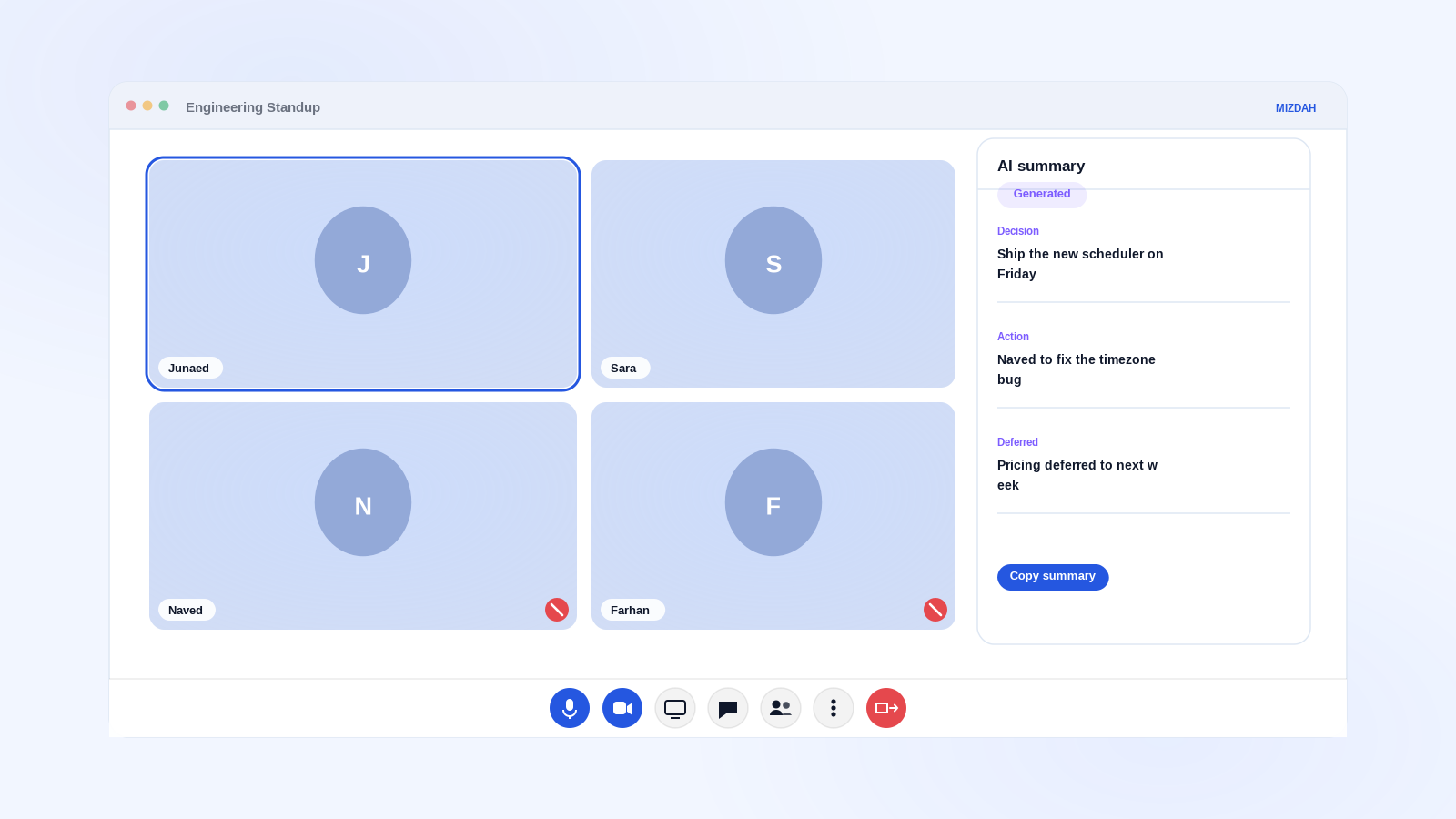
Reading a summary well
Treat the action items as a draft. They are extracted from language like "I'll pick that up", which people say both when committing and when being polite.
Check the decisions against your own memory before forwarding them. A summary is confidently written whether or not it is right, and that confidence travels further than it deserves.
Insights and guides from the team building Mizdah.
Ready to communicate better?
Start using Mizdah today — no download, no sign-up to join.
Get Started