

Most bad meetings are not a technology problem. The camera works, the audio is fine, everyone is present — and the half hour still goes nowhere. The fix is almost always structural.
Why online meetings fail
A meeting fails for one of three reasons: nobody knows what decision it exists to make, the wrong people are in the room, or it has no end state. Remote meetings expose all three faster than a room does, because there is no corridor conversation afterwards to quietly repair them.
The most common failure is the standing meeting that outlived its purpose. It was created to solve something specific, the problem went away, and the invite stayed.
Before the meeting
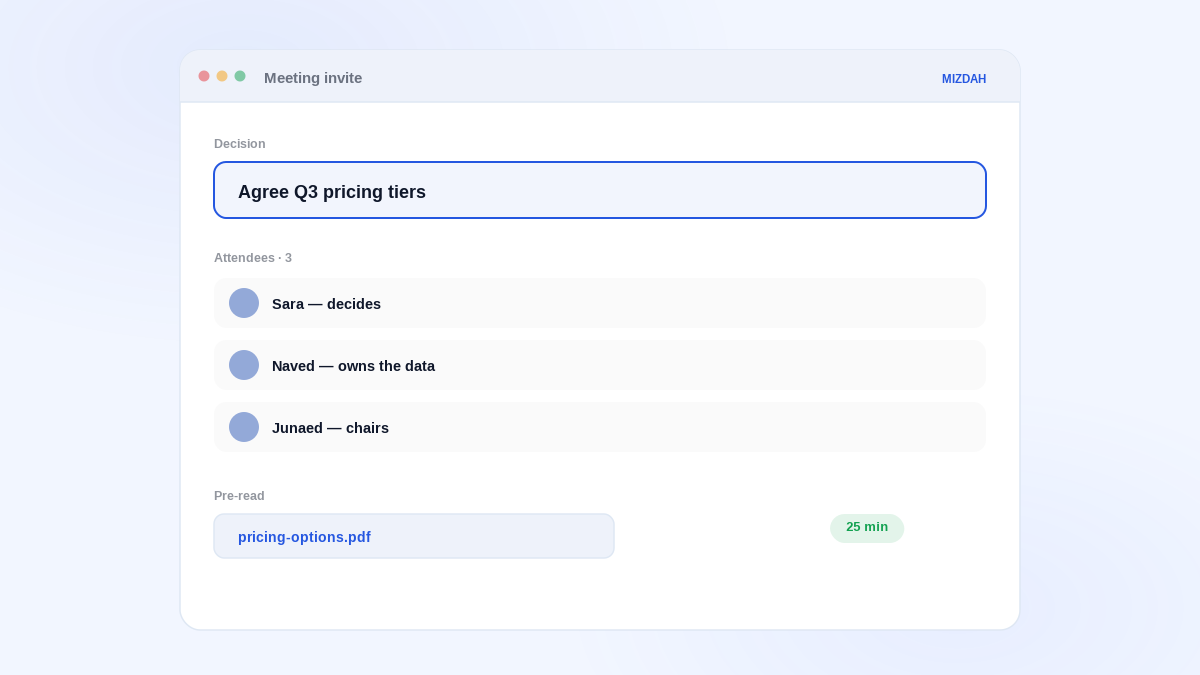
Write the decision in the invite. Not a topic — a decision. "Agree Q3 pricing tiers" is a meeting. "Pricing discussion" is a placeholder.
Then cut the guest list. If someone only needs the outcome, they need the notes, not the half hour. A useful test: if a person would not be missed were they silent throughout, they should not be there.
Share the material in advance and expect it to be read. A meeting that begins with ten minutes of context-setting is a document that was sent too late.
During the meeting
Start by restating the decision and the time you have. It sounds mechanical the first few times and then it becomes the reason the meeting ends on schedule.
Let the quietest person speak first on each point. Online, seniority and bandwidth both distort who talks — going in a deliberate order costs nothing and surfaces the objection that would otherwise arrive by message the next morning.
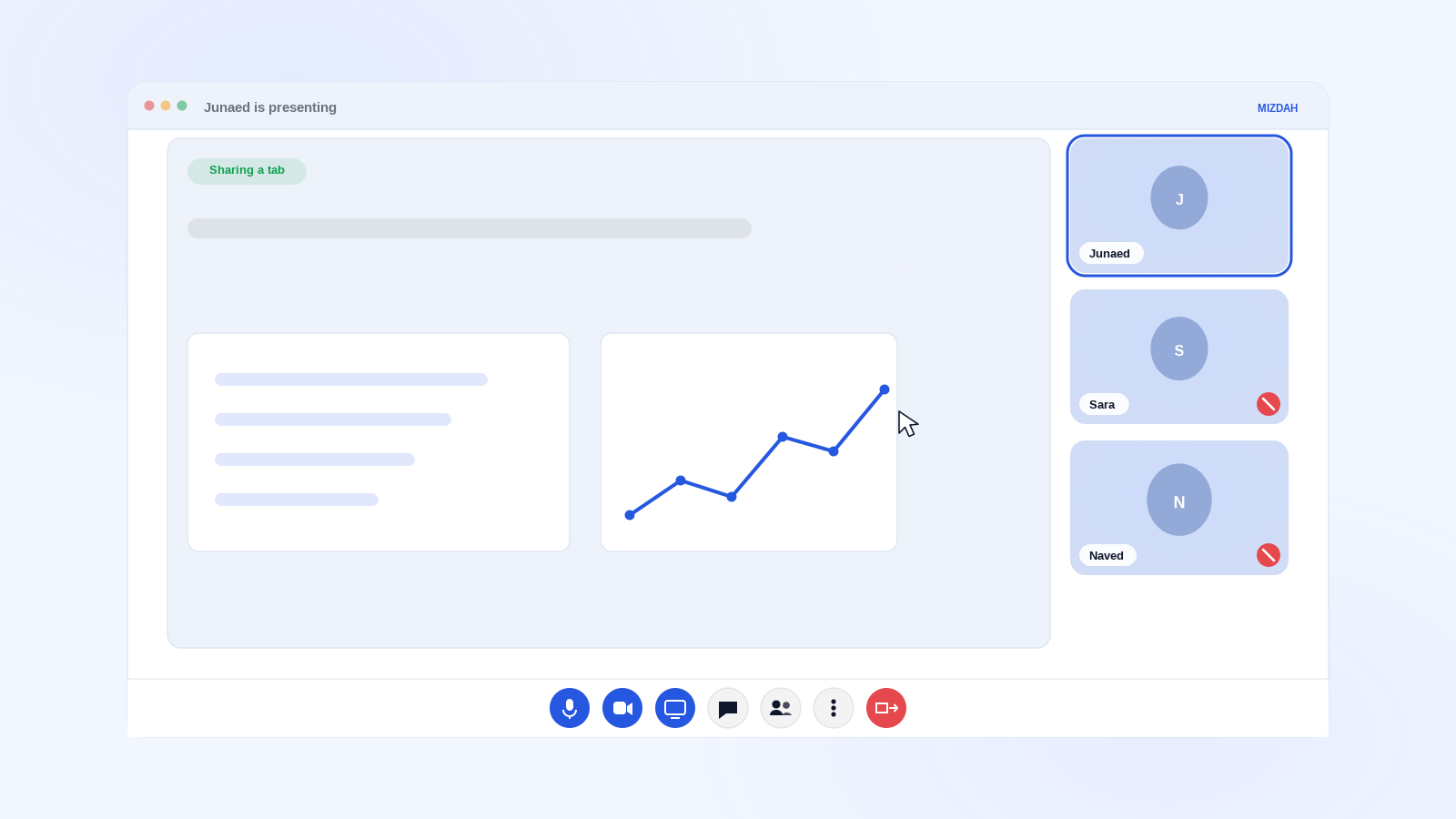
Watch for the drift into status. If people are reporting rather than deciding, the meeting has turned into a document being read aloud. Stop it and move on.
After the meeting
Send the decision, the owner and the date, in that order, within the hour. Anything else is optional. If you cannot write those three things down, the meeting did not finish — schedule the follow-up now while everyone still remembers the context.
How Mizdah helps
Mizdah is built around the parts of this that are mechanical. Scheduling puts the decision in the invite and keeps the guest list small. Recording means the people who only needed the outcome can skip the call. Breakout rooms let a large group actually decide something instead of taking turns talking.
None of that makes a badly-framed meeting good. It does stop a well-framed one from being ruined by logistics.
Insights and guides from the team building Mizdah.
Ready to communicate better?
Start using Mizdah today — no download, no sign-up to join.
Get Started